


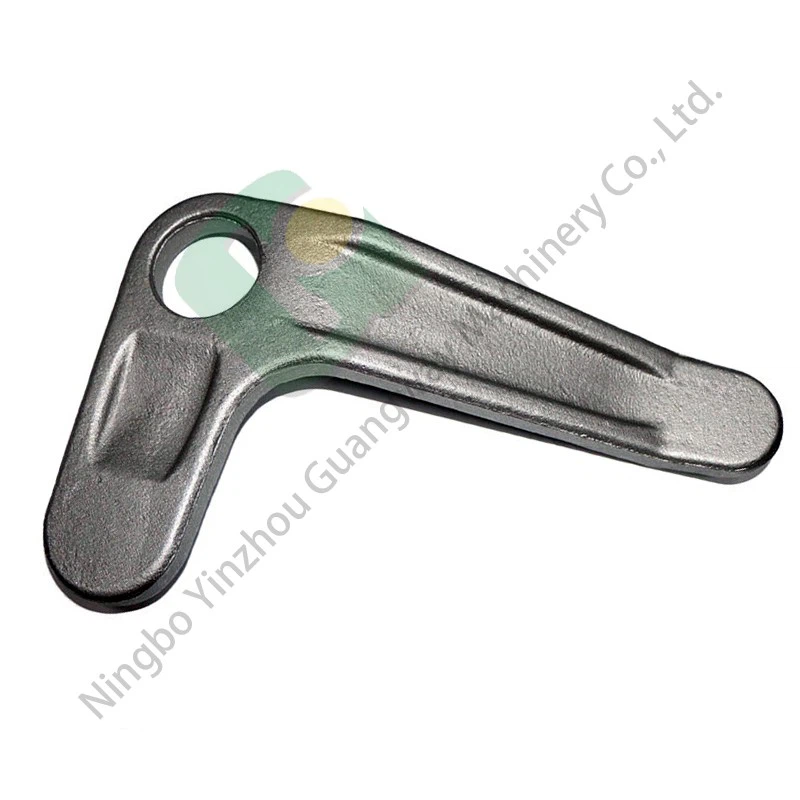


- Heating: The steel or alloy is heated in a furnace at 1,000 degree to 1,300 degree in the case of steel. The heating plasticizes in character, making it more workable.
- Forging: The metal is preheated before pressing into a high-pressure forging hammer or forging press. The form in which the automotive component is formed is that of a high-pressure die that pushes the metal into a cavity.
- Trimming and Finishing:
- High Strength: The hot forging procedure also grains refines the metal, making its parts more durable in terms of durability in comparison with those that have been made with alternative technologies. They are hence suitable for application in high-critical automotive parts, which include engine parts, gear parts, as well as suspension.
- Good Fatigue Strength:
- Customizability:
- Material Testing: The raw material is pre-checked in terms of its contents in chemicals, its hardness, etc. before forging in order to meet requirements specified.
- In-process Monitoring: In-process monitoring is conducted with a stringent monitoring of forging speed, pressure, as well as temperature in a bid to achieve quality that is consistent.
-The parts are finally brought in for a series of examinations, from dimensional examination, hardness examination, as well as non - destructive examination (like ultrasonics as well as magnetic particle examination), in a bid to determine that they comply with quality requirements.
- Engine Components: Hot - forging parts are used in engines in crankshafts, connecting rods, camshafts, as well as in valve seats. The parts are required to be withstanding high heat, pressures, as also mechanical loads.
- Transmission Systems: The gears, shaft, as well as clutch parts in a transmission are usually hot-forged in order that power transfer is seamless as well as reliable.
- Suspension and Stepping Systems:
It-tags Popolari: hot-forged auto parts, China hot-forged auto parts manufacturers, suppliers, factory